




A long-term disability lawyer helps people whose illness, injury, or medical condition prevents them from working and whose long-term disability benefits have been denied, delayed, terminated, or disputed. Disability insurance disputes can affect your monthly income at a time when you are already dealing with medical treatment and financial stress.  An experienced disability lawyer can help you understand your long-term disability coverage and deal with the insurance company on your behalf.
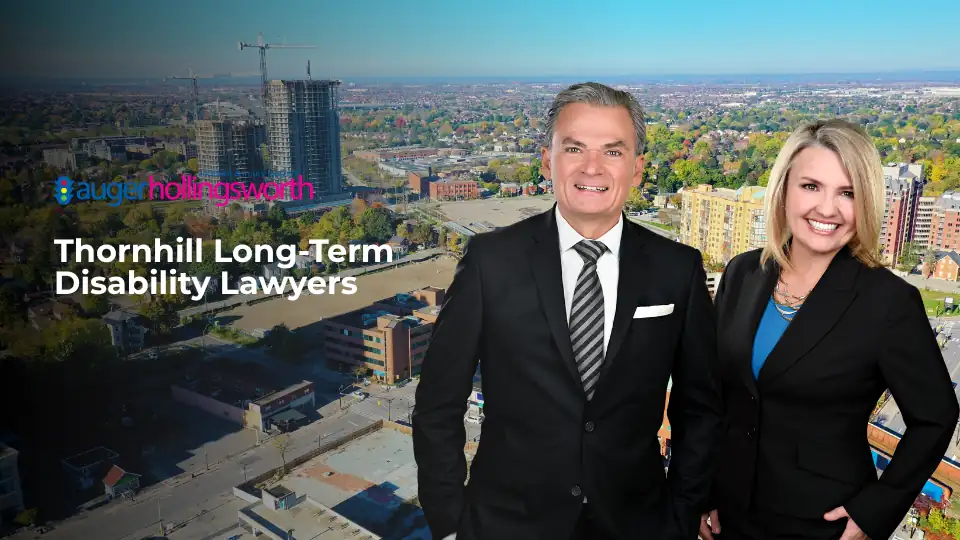
long-term disability lawyer in thornhill

Every disability insurance policy is different. Some policies initially assess whether you can perform your own occupation. The definition of disability may later change and require proof that you cannot perform another suitable occupation. The exact test depends on the wording of your long-term disability insurance policy. Our disability lawyers review the policy, medical records, correspondence, denial letters, employment information, and other evidence. We then identify what must be proven and what steps may be available in the disability claim process.

If you need help with a long-term disability claim, Auger Hollingsworth’s personal injury lawyers in Thornhill can assist with new claims, denied disability claims, benefit terminations, appeals, negotiations, and disability insurance litigation.

What Qualifies for Long-Term Disability in Ontario

Eligibility for long-term disability (LTD) benefits generally depends on the definition of disability contained in your policy. A diagnosis alone may not be enough. The insurer normally considers how your symptoms affect your ability to perform your occupational duties.

Conditions that may support a claim can include physical or psychological impairments such as:

  • Brain injury
  • Spinal cord injuries
  • Chronic pain
  • Cancer and other forms of critical illness
  • Neurological disorders
  • Musculoskeletal conditions
  • Autoimmune diseases
  • Depression, anxiety, PTSD, and other forms of mental illness
  • Other physical or mental injuries
  • A serious or catastrophic injury

A pre-existing condition does not automatically mean that LTD coverage is unavailable. However, some disability insurance policies contain pre-existing-condition exclusions. Their application depends on the wording of the policy and the circumstances surrounding the claim.

The insurer may also assess whether the claimant meets the policy’s definition of total disability. Total disability does not necessarily mean that an insured person must be completely incapable of every activity. The applicable definition must be determined from the policy itself.

Strong medical evidence is often important. It may include treatment records, specialist reports, diagnostic results, medication history, functional restrictions, and other medical documentation showing how the condition affects your ability to work.

The Process of Filing a Disability Claim
LTD1

A disability claim begins by reviewing the available coverage and determining the insurer’s requirements.

A typical disability claim process may involve:

  • Reviewing the insurance policy. The policy identifies the definition of disability, waiting period, benefit calculation, exclusions, and procedural requirements.
  • Notifying the insurer. Claims should be submitted according to the timelines and procedures specified by the insurer.
  • Completing claim forms. The claimant, employer, and treating medical professionals may each be required to provide information.
  • Submitting medical evidence. Records should explain the diagnosis, treatment, symptoms, limitations, restrictions, prognosis, and effect on work capacity.
  • Providing occupational information. The insurer may examine your actual job duties and the physical, cognitive, or psychological demands of your occupation.
  • Responding to insurer requests. Disability insurers may request additional records, interviews, medical assessments, functional evaluations, or other information.
  • Receiving a decision. The insurer may approve the claim, request further evidence, or issue a denial.
  • Challenging a denial when appropriate. Depending on the circumstances, this may involve further evidence, negotiations, an insurer appeal, or a disability lawsuit.

Keeping copies of forms, medical records, correspondence, and denial letters can help preserve a clear record of the claim.

Top Reasons for LTD Claim Denials

LTD2 1
Disability insurance companies may deny or terminate benefits for several reasons. The insurer should explain the basis for its decision.

Common reasons include:

  • Insufficient medical evidence
  • Medical records that do not clearly document functional limitations
  • A dispute about whether the claimant meets the policy’s definition of disability
  • A change from an own-occupation test to another-occupation test
  • A pre-existing-condition exclusion
  • Missed forms or procedural deadlines
  • A dispute about treatment or rehabilitation
  • Surveillance or social media evidence relied on by the insurer
  • An insurer’s position that the claimant can return to work
  • Conflicting medical opinions
  • A dispute about the claimant’s ability to perform another occupation

A denial does not necessarily end a claim. A long-term disability lawyer can assess the insurer’s reasons, compare them with the policy wording, and determine whether further medical or vocational evidence may support the claim.

Benefits of Working with LTD Lawyers

LTD3
LTD disputes involve detailed policy language, medical records, occupational evidence, and communications with insurance providers. Legal representation can help organize these issues and reduce the burden of dealing directly with the insurer.

Our LTD legal services can include:

  • Reviewing the disability insurance policy
  • Evaluating the reasons for denial or termination
  • Gathering relevant medical documentation
  • Communicating with the insurer
  • Reviewing occupational duties and employment records
  • Examining income and benefit calculations
  • Assessing CPPD or other benefit offsets
  • Responding to requests from the insurer
  • Negotiating disputed claims
  • Commencing litigation where appropriate
  • Advising clients about settlement proposals and ongoing benefits

A disability case differs from a typical personal injury claim. LTD disputes focus heavily on contractual rights under an insurance policy and whether the medical and occupational evidence meets the policy’s requirements. Our personal injury law firm can assess the appropriate legal approach based on the type of claim involved.


Why Choose Our Disability Lawyers

Auger Hollingsworth Accident & Injury Lawyers represents people facing serious insurance disputes after illness or injury. Our experienced team focuses on clear communication, careful preparation, and practical guidance throughout the claim.

We understand that the loss of income replacement benefits can affect housing costs, treatment expenses, family obligations, and daily living. Our legal team works to understand both the policy and the medical circumstances behind each case.

Real Support Throughout the Process

A denied LTD claim can involve repeated forms, medical appointments, insurer requests, and difficult correspondence. We explain each stage in plain language and help clients understand what information is required.

We can communicate with disability insurers and other parties on your behalf. Our goal is to provide professional service while keeping you informed about your case.

No Matter Where You Are in Ontario, We’re Here for You

We represent clients in Thornhill and throughout Ontario. Meetings and case communications can often be handled remotely when appropriate.

This allows people with disabilities or serious health conditions to obtain legal advice without unnecessary travel. We can discuss available meeting arrangements during your consultation.

Your Case Matters to Us—Not Just the Settlement

A disability claim can affect much more than a possible injury settlement or lump-sum payment. Clients may depend on continuing monthly benefits to replace lost annual income while they remain unable to work.

We examine whether the objective should involve reinstating benefits, recovering past-due payments, negotiating a settlement, or pursuing insurance claim disputes through litigation. The appropriate strategy depends on the policy, evidence, and individual circumstances.

FAQs About Disability Claims

What medical evidence do I need for LTD claims in Ontario?

You generally need medical evidence showing your diagnosis, symptoms, treatment, restrictions, limitations, prognosis, and how your medical condition prevents you from performing the duties required under the policy’s definition of disability.

Useful evidence may include family doctor records, specialist reports, diagnostic testing, medication records, psychological or psychiatric reports, treatment notes, functional assessments, and other medical documentation.

For conditions such as chronic pain or a mental condition, documenting functional impairment is especially important because symptoms may not always be demonstrated by a single diagnostic test.

The insurer may request ongoing evidence even after benefits have been approved.

Can I work part-time while receiving disability benefits?

Possibly. The answer depends on your disability insurance policy, your medical restrictions, your earnings, and the nature of the work.

Some long-term disability policies contain provisions for partial or residual disability. Others may reduce benefits based on employment income.

Do not assume that returning to part-time work will have no effect on your benefits. Review the policy and report work or earnings when required.

CPP disability benefits also have rules concerning work and earnings because eligibility depends on whether the claimant remains regularly incapable of substantially gainful employment.

Are LTD benefits taxable?

It depends on who paid the disability insurance premiums.

The Financial Consumer Agency of Canada states that when an employee pays the entire disability premium personally, benefits are generally tax-free. When an employer pays all or part of the premium, disability benefits are generally subject to income tax.

The tax treatment can depend on the specific insurance arrangement. Review your benefit plan and obtain tax advice for your individual circumstances.

Book a Free Consultation With Our Thornhill LTD Lawyers

If your LTD application has been denied, your benefits have stopped, or you are having difficulty obtaining approval, speak with Auger Hollingsworth Accident & Injury Lawyers.

Our Thornhill disability lawyers offer free case evaluations to discuss the circumstances of the denial and the options that may be available. We can also explain our legal fees and the terms of representation before you decide whether to proceed.

Contact our legal team for a free, no-obligation consultation about your long-term disability claim.

Helpful info, delivered to you—free!

Sign up for our free monthly newsletter. It’s full of useful info (plus occasional giveaways). You can unsubscribe anytime.