




A Sudbury pedestrian accident lawyer at Auger Hollingsworth helps injured pedestrians pursue compensation after being struck by a motor vehicle. We explain your options, handle insurance claims, and build evidence of how your injuries affect your life. For compassionate guidance after a pedestrian accident, contact our Sudbury personal injury lawyers at Auger Hollingsworth Accident & Injury Lawyers.
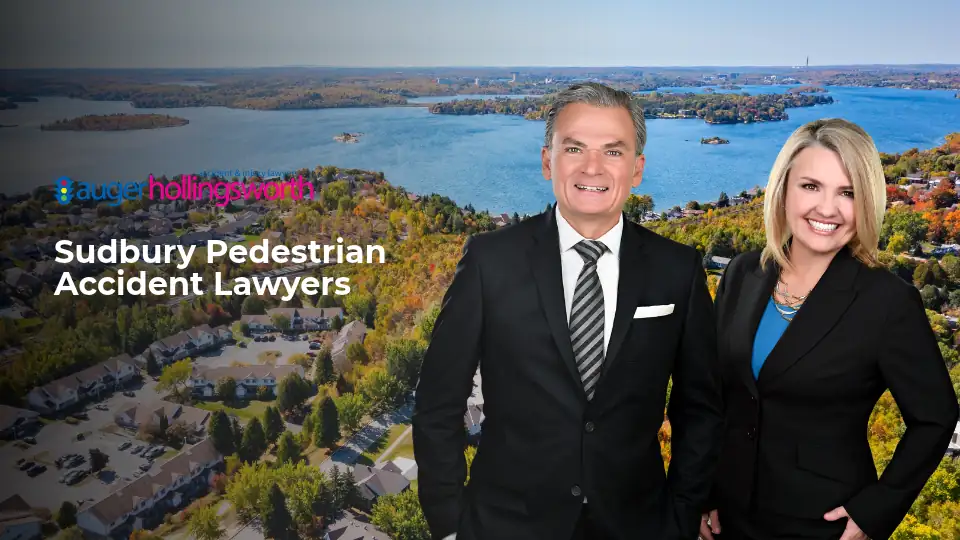
pedestrian accident lawyer in sudbury

Common Causes of Pedestrian Accidents in Sudbury

Pedestrian accidents can happen at an intersection, in a parking lot, or while someone crosses a road. We investigate the driver’s actions, road conditions, and available evidence to identify what caused the collision.

Distracted Driving

Drivers using phones, adjusting navigation systems, or looking away from the road may fail to see pedestrians. Witness accounts and available video footage can help establish whether distraction contributed to the accident.

Speeding

Speeding reduces the time available to react to someone crossing the road. Driving too fast for conditions can also increase stopping distances and the severity of injuries.

Failure to Yield

Drivers may strike pedestrians while turning or entering crosswalks. Red lights, stop signs, pedestrian signals, and the applicable right-of-way rules help establish each person’s responsibilities.

Impaired Driving

Alcohol and drugs can affect judgement, coordination, and reaction time. We review available police evidence when impairment may have contributed to a collision.

Poor Weather Conditions

Snow, ice, heavy rain, and poor visibility can create hazardous conditions on Sudbury roads. Drivers must adjust their driving to the conditions. Bad weather does not automatically excuse unsafe driving.

Common Injuries in Pedestrian Accidents

Pedestrians Crossing

Pedestrians have little protection against the force of a vehicle. We document the injury, treatment needs, and effects on work and daily activities when preparing personal injury claims.

Traumatic Brain Injuries

A traumatic brain injury can affect memory, concentration, balance, and emotional regulation. Symptoms may interfere with employment and independent living. Medical records and specialist assessments help establish ongoing limitations.

Fractures or Broken Bones

Fractures and broken bones may require surgery, immobilisation, and physiotherapy. These orthopaedic injuries can affect walking, lifting, and returning to work. Some people develop lasting pain or reduced mobility.

Spinal Cord Injuries

Spinal cord injuries can cause changes in sensation, weakness, or paralysis. A serious injury may require mobility equipment, home modifications, and ongoing personal assistance. We assess both immediate needs and future care costs.

Internal Injuries

A collision can damage internal organs or cause internal bleeding. Symptoms may not be obvious at the accident scene. Prompt medical assessment is essential after a significant impact.

Understanding Liability in Pedestrian Accidents

Pedestrian Accident

Liability depends on the circumstances and the applicable law. We examine negligence, traffic signals, witness evidence, and the conduct of everyone involved.
Ontario’s Highway Traffic Act includes a reverse-onus provision for certain collisions involving pedestrians on a highway. In applicable cases, the owner, driver, lessee or operator of the motor vehicle must establish that the loss did not arise through their negligence or improper conduct. This does not guarantee that the driver will be held fully responsible.
A pedestrian’s own negligence may reduce the damages recoverable. We assess allegations such as crossing against a signal or entering the road when it was unsafe.
Insurance companies use fault determination rules for certain automobile insurance decisions. Those rules do not replace the court’s assessment of negligence in a pedestrian injury lawsuit.

The Benefits of Hiring a Pedestrian Accident Attorney

A personal injury lawyer can identify available claims and manage the legal process. We explain your responsibilities, gather supporting records, and communicate with insurers and opposing lawyers.

Our work may include:

  • Obtaining police reports, witness statements, and available surveillance footage.
  • Reviewing medical records and employment information.
  • Identifying the insurer responsible for accident benefits.
  • Assessing treatment needs and future financial losses.
  • Responding to disputed liability or denied benefits.
  • Negotiating a settlement and preparing for trial when necessary.

You receive advice before accepting an offer or signing a release. We explain how a proposed settlement addresses your documented losses and future needs.


Why Choose Our Pedestrian Accident Lawyers in Sudbury

Auger Hollingsworth represents injured people across Ontario, including Sudbury residents. Our personal injury law practice focuses on clear advice, careful case preparation, and practical support during recovery.

Real Support Throughout the Process

We explain what documents are needed and what happens next. Our team answers questions about insurer requests, claim progress, and settlement decisions. We recognise that injuries can create financial pressure and uncertainty.

No Matter Where You Are in Ontario, We’re Here for You

We serve Sudbury clients through telephone and virtual meetings. Home or hospital visits can be arranged when appropriate. We discuss meeting options that accommodate your health and mobility.

Your Case Matters to Us—Not Just the Settlement

We assess how the collision affects your independence, family responsibilities, and ability to earn a living. Our preparation considers future treatment and support needs. We explain your options so you can make informed decisions about your case.

Compensation for Pedestrian Accident Victims

An injured pedestrian may have an accident benefits claim and a separate lawsuit against a responsible party. These claims serve different purposes, and eligibility depends on the facts and applicable coverage.

Depending on your case, compensation may address:

  • Lost wages and reduced future earning capacity.
  • Medical expenses and eligible medical bills.
  • Rehabilitation, assistive equipment, and future care.
  • Personal assistance and necessary home modifications.
  • Pain, suffering, and loss of enjoyment of life.

Ontario law places limits on some damages arising from motor vehicle accidents. Claims for pain and suffering and certain health-care expenses generally require a permanent serious disfigurement or a permanent serious impairment of an important physical, mental, or psychological function. A deductible may also apply. We assess how these rules apply to your claim.

Statutory Accident Benefits are governed by the Statutory Accident Benefits Schedule. Eligible pedestrians may receive accident benefits regardless of who caused the collision. For policies entered into or renewed on or after July 1, 2026, medical, rehabilitation, and attendant care benefits remain mandatory, while other benefits, including income replacement, are optional.

A pedestrian without their own applicable automobile insurance may still qualify for mandatory benefits through another available insurer. We identify the appropriate insurer and the benefits that may be available.

Steps to File a Pedestrian Accident Claim

A claim begins with medical care, reporting, and preserving evidence. We help you identify the required applications and deadlines before taking legal action.

  1. Get medical attention. Describe your symptoms and attend recommended follow-up appointments.
  2. Report the collision. Contact police and obtain the occurrence number. Request the Motor Vehicle Collision report when available.
  3. Preserve evidence. Keep photographs, witness details, damaged belongings, and correspondence.
  4. Identify the appropriate insurer. We review available policies and help determine where to submit your claim.
  5. Document your losses. Keep treatment receipts, employment records, and notes about your limitations.
  6. Assess a lawsuit. We investigate liability and prepare the evidence needed to pursue damages.

Accident benefits applications have reporting and submission deadlines. Notify the appropriate insurer promptly. A civil injury lawsuit is generally subject to a two-year limitation period from discovery of the claim, subject to exceptions. Other notice requirements can arise, so seek advice early.

FAQs

Pedestrian injury claims raise questions about treatment costs, responsibility, and financial recovery. The answers below provide general information about Ontario claims.

What to do after a pedestrian accident?

Call 911 if anyone is injured or needs emergency assistance. Obtain medical care and report the collision to police. If safe, collect the driver’s insurance details, witness information, and photographs. Contact a pedestrian accident lawyer promptly to discuss evidence and deadlines.

Can a pedestrian sue if they get hit by a car?

Yes. A pedestrian injured in a car accident may pursue a lawsuit against a negligent driver or another responsible party. Being struck does not guarantee compensation. Liability, injuries, statutory requirements, and deadlines must be assessed.

How much compensation for a pedestrian accident in Ontario?

There is no fixed amount of compensation after a pedestrian accident. Compensation depends on injury severity, recovery, income losses, future care needs, and responsibility for the collision. Insurance limits, statutory deductions, and benefits already received may also affect recovery. We evaluate your losses using the available evidence.

Book a Consultation with a Sudbury Pedestrian Accident Lawyer

Contact Auger Hollingsworth Accident & Injury Lawyers for a free, no-obligation consultation about injuries from pedestrian collisions and other auto accidents. We will review what happened, explain your options, and discuss how we can help.

We offer contingency fee representation. Legal fees are payable when compensation is recovered, according to the agreement. We explain fees, disbursements, and applicable taxes before you decide to proceed.

Helpful info, delivered to you—free!

Sign up for our free monthly newsletter. It’s full of useful info (plus occasional giveaways). You can unsubscribe anytime.