



Losing a loved one due to someone else’s negligence is devastating. A Richmond Hill wrongful death lawyer at Auger Hollingsworth Accident & Injury Lawyers helps surviving family members pursue justice and compensation through wrongful death claims. Our Richmond Hill personal injury law firm has decades of experience helping families in Ontario secure fair compensation after tragic accidents, medical malpractice, and other fatal incidents.
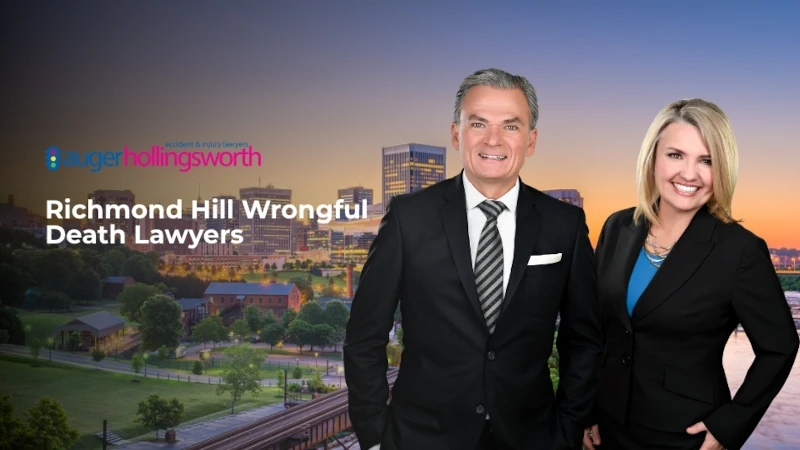
Top-Rated Wrongful Death Lawyer in Richmond Hill
Our wrongful death lawyers represent families in Richmond Hill dealing with the sudden and untimely death of a loved one. We handle wrongful death lawsuits stemming from various causes and navigate the complex legal process on your behalf. Auger Hollingsworth is recognized for compassionate advocacy, thorough legal guidance, and a results-driven approach to personal injury litigation.
Common Causes of Wrongful Death
Wrongful deaths occur when a person loses their life due to another party’s negligence, misconduct, or failure to act. These incidents are often preventable and result in substantial legal consequences for the responsible party. Identifying the cause of death is the first step toward determining liability and initiating a wrongful death action. Our legal team investigates each case thoroughly to determine if a claim is warranted under Ontario’s wrongful death laws.
Common causes of wrongful death include:
- Motor vehicle accidents including cars, motorcycles, and commercial trucks
- Medical malpractice, such as surgical errors, misdiagnoses, and failure to treat
- Defective products, including unsafe medical devices and consumer goods
- Workplace incidents, especially involving catastrophic injuries
- Nursing home neglect or abuse leading to untimely death
Each case is unique, and our legal experts work to uncover the responsible party and hold them accountable.

Request a Call Back
NO WIN, NO FEE GUARANTEE

"(Required)" indicates required fields
Who Can File for a Wrongful Death Claim
 Under Ontario’s Family Law Act, not all relatives are automatically entitled to file a wrongful death claim. The law identifies specific family members who may seek damages due to the financial and emotional impact of losing a loved one. The ability to file depends on the nature of the relationship and the losses suffered by the surviving individuals.
The following eligible family members may bring a wrongful death lawsuit:
- Spouses – Including married and common-law partners.
- Children – Biological and adopted children who were financially or emotionally dependent on the deceased.
- Parents – Either or both parents of the deceased individual.
- Siblings – In some cases, if financial dependency or caregiving roles existed.
- Grandparents or Grandchildren – Where applicable, if they relied on the deceased for support or care.
Each eligible party may claim damages specific to their personal loss, such as loss of care, loss of companionship, or loss of services.
 Wrongful death claims provide compensation for the losses sustained by surviving family members as a result of their loved one’s death. The goal is to recognize both financial and non-financial consequences of the untimely death, and to help families recover from the burden left behind. These damages may vary depending on the relationship to the deceased and the circumstances of the death.
Proving Liability in Wrongful Death Claims
 Establishing legal liability is central to any successful wrongful death litigation. To obtain compensation, the claimant must prove that the defendant’s actions or omissions directly caused the death and that this led to recoverable damages. The standard of proof relies on civil evidence, which differs from the criminal justice system.
To prove wrongful death, we work to establish:
- Duty of care – That the responsible party owed a legal obligation to the deceased (e.g., doctors, drivers, product manufacturers).
- Breach of duty – That this duty was violated through negligence, recklessness, or misconduct.
- Causation – That the breach directly caused the fatal injury or medical event.
- Resulting damages – That the family experienced financial losses, emotional losses, and other forms of measurable damages as a result.
Proving liability often requires expert testimony, detailed documentation, and strategic management of insurance issues and disputes with insurance providers. Our lawyers handle this challenging process with precision and experience.