




If you are struggling to obtain long-term disability benefits after an illness or injury, an Oshawa long-term disability lawyer from Auger Hollingsworth Accident & Injury Lawyers can help you. Our experienced legal team assists individuals who have been denied benefits or are facing delays from insurance providers. We handle every stage of the disability claim process to help you secure the financial support you deserve. If your insurance company has denied your claim, contact Auger Hollingsworth Accident & Injury Lawyers for experienced legal representation and support.
Experienced Disability Lawyer in Oshawa
Our experienced disability lawyers in Oshawa represent people with disabilities who cannot work due to physical, psychological, or cognitive impairments. We understand how complex long-term disability policies can be and how challenging it is to deal with disability insurers. Our Oshawa personal injury lawyers review policy terms, gather medical documentation, and negotiate with insurance companies to ensure clients receive their entitled disability benefits. Whether you are dealing with long-term disability insurance or short-term disability benefits, we provide trusted legal services backed by extensive experience in disability law.


Request a Call Back
NO WIN, NO FEE GUARANTEE

"(Required)" indicates required fields
What Qualifies for Long-Term Disability in Ontario
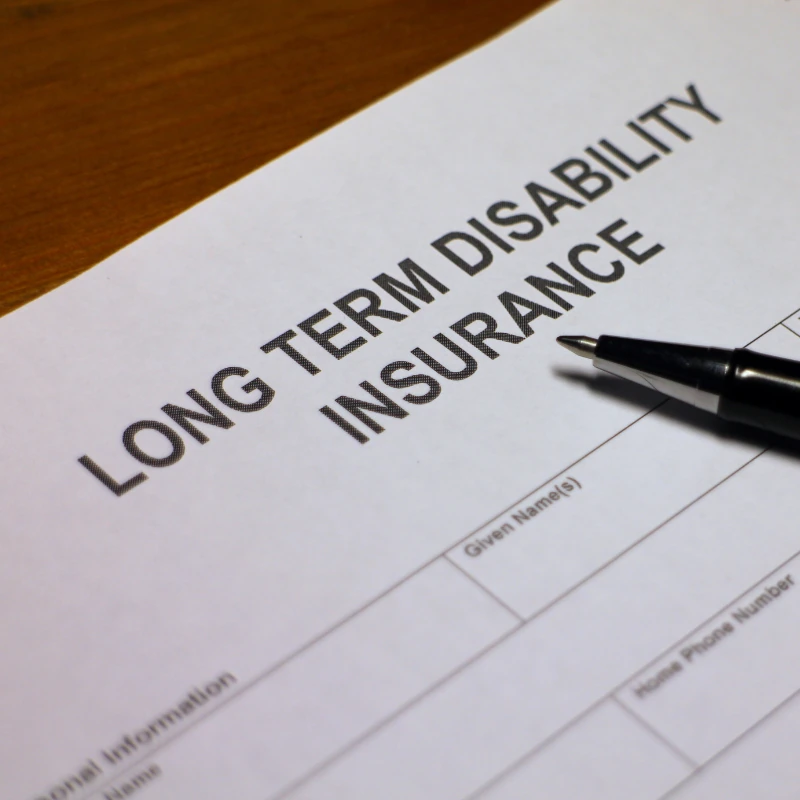 To qualify for long-term disability benefits in Ontario, an insured person must show that a serious medical condition, physical, psychological, or cognitive, prevents them from performing the essential duties of their occupation. Most long-term disability policies include two distinct tests: the “own occupation” test, which applies for the first 24 months, and the “any occupation” test, which applies after that period.
During the “own occupation” phase, you may be entitled to benefits if your illness or injury prevents you from doing the core duties of your job. After two years, your eligibility depends on whether your condition stops you from performing any occupation that matches your education, training, or experience.
Examples of conditions that commonly qualify include:
- Orthopaedic or spinal injuries, including fractures and spinal cord injuries.
- Neurological conditions, such as brain injuries or multiple sclerosis.
- Mental health conditions, including depression, anxiety, or post-traumatic stress disorder.
- Chronic pain syndromes, fibromyalgia, and fatigue-related disorders.
- Critical illnesses, such as cancer, heart disease, or autoimmune disorders.
Your medical evidence must demonstrate functional limitations; how your condition affects your ability to work. Supporting documentation from doctors, specialists, and therapists is essential, as is proof of consistent treatment. Insurers often deny claims when the documentation is incomplete or inconsistent, so having a long-term disability lawyer guide the process ensures your claim meets all requirements under the disability insurance policy.
 Ontario residents may qualify for different kinds of long-term disability benefits, depending on the nature of their coverage and employment. Understanding the available programs helps you access the right benefits and avoid losing income support.
Top Reasons for LTD Claim Denials
 Insurance companies often deny long-term disability claims for reasons that may seem minor or unfair to the claimant. Understanding these common issues can help you avoid mistakes and strengthen your application.
- Lack of Medical Evidence: Claims are denied when documentation does not clearly prove total disability or link symptoms to work limitations.
- Pre-Existing Conditions: Insurers may reject claims related to medical conditions that existed before your coverage began.
- Missed Appointments or Treatment Gaps: Failing to follow your doctor’s treatment plan can signal to insurers that you’re not taking recovery seriously.
- Surveillance and Social Media: Insurers may misinterpret normal daily activities as proof you can work full-time.
- Incomplete Forms: Missing or conflicting information between your and your employer’s forms can trigger a denial.
- Mental Health and Chronic Pain Claims: Conditions without “objective” evidence, like mental illness or chronic pain, are frequently disputed.
If your claim is denied, a long-term disability lawyer can review your insurance policy, gather additional medical documentation, and negotiate or litigate to secure your long-term disability benefits.