




A brain injury lawyer helps people pursue compensation after accidents that cause traumatic brain injuries (TBIs). At Auger Hollingsworth Accident & Injury Lawyers, we represent people facing concussion symptoms, cognitive difficulties, and lasting disabilities. Our TBI lawyers investigate what happened, assess your losses, and handle insurance disputes so you can focus on treatment and recovery. Our Etobicoke personal injury lawyers also bring extensive trial experience and thorough preparation to brain injury claims.
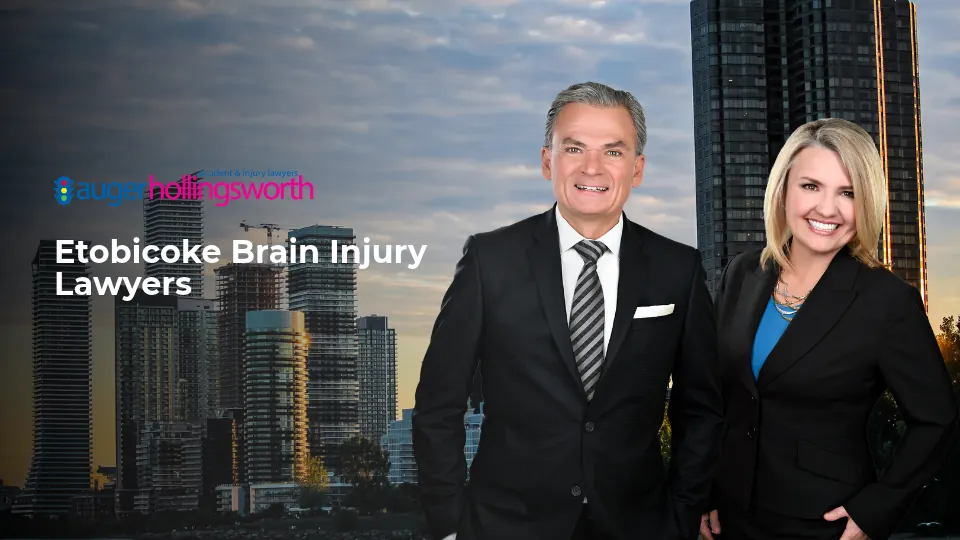
For compassionate legal representation, contact Auger Hollingsworth Accident & Injury Lawyers.
Types of Brain Injuries
A TBI occurs when an external force damages the brain and/or disrupts its function. The injury may affect one area or involve damage across several regions.
Common types of brain injuries include:
- Concussion
A concussion is a mild traumatic brain injury that can have significant effects. Symptoms may include headaches, dizziness, memory problems, and sensitivity to light. Loss of consciousness may or may not occur.
- Contusion
Cerebral contusions, also known as brain contusions, are bruises within brain tissue. These brain contusions can involve bleeding and swelling after a direct impact or sudden movement. Their effects depend on the location and extent of the injury.
- Subdural Hemorrhage
A subdural hemorrhage involves bleeding between the brain and its outer protective covering. These hemorrhages can place pressure on the brain and require urgent medical assessment.
- Penetrating Brain Injury
A penetrating injury occurs when an object passes through the skull and damages brain tissue. It can involve skull fractures, bleeding, and damage to surrounding structures.
- Diffuse Injury
Diffuse axonal injuries involve damage to nerve fibres across different brain regions. Rapid acceleration, deceleration, or rotation can cause this damage, including during motor vehicle crashes.

Request a Call Back
NO WIN, NO FEE GUARANTEE

"(Required)" indicates required fields
Common Causes of Brain Injuries
Brain injuries can follow collisions, falls, sports incidents, or violence. A compensation claim requires an assessment of the circumstances, available insurance, and any legal responsibility.
Common causes of brain injury may include:
- Motor Vehicle Accidents
A motor vehicle accident can cause a TBI through an impact or sudden movement of the head. Pedestrians, cyclists, motorcyclists, drivers, and passengers may be affected.
We investigate the motor vehicle accident using available photographs, witness accounts, collision records, and medical evidence. We also assess related car accident injuries, including spinal cord injuries, when calculating losses.
- Falls
A slip and fall on ice, wet flooring, or an unsafe staircase can cause a serious brain injury. We examine property conditions, maintenance records, inspection procedures, and surveillance footage. Liability depends on the applicable legal duties and evidence.
- Contact Sports
Brain injuries can occur during contact sports, such as hockey, football, and rugby. An injury alone does not establish negligence. We assess whether unsafe conditions, inadequate supervision, or conduct beyond the ordinary risks of play contributed to the harm.
- Assaults and Violence
An assault can cause brain trauma through a blow, violent movement, or a fall. Depending on the evidence, a civil claim may involve the attacker or another party whose negligence contributed to the incident. We assess potential liability separately from any criminal proceedings.
- Birth Injuries
A birth injury can involve trauma or oxygen deprivation affecting a baby’s brain around delivery. These cases require specialist medical and legal assessment. Our practice focuses on accident injuries and disability disputes; we do not handle medical malpractice claims.
What Compensation Can You Claim for a Brain Injury?
Compensation depends on liability, medical evidence, financial losses, and available insurance. Our brain injury lawyers assess current expenses and future needs before advising you about a settlement.
Depending on the claim, recoverable losses may include:
- Pain, suffering, and loss of enjoyment of life.
- Lost income and reduced earning capacity.
- Rehabilitation and medical expenses.
- Attendant care and future care costs.
- Housekeeping assistance and home modifications.
- Eligible losses suffered by qualifying family members.
After a motor vehicle accident, Statutory Accident Benefits (SABS) and a civil lawsuit serve different purposes. Accident Benefits may provide eligible support regardless of fault. In contrast, a lawsuit seeks damages from a legally responsible party and remains subject to Ontario’s rules on liability, thresholds, deductibles, and benefit deductions.
Ontario’s Accident Benefits’ coverage was amended on July 1, 2026. Medical, rehabilitation, and attendant care benefits remain mandatory, while other benefits are optional. We review the applicable policy and accident date to identify available coverage.
If you cannot work, long-term disability coverage may also be relevant. We assess the policy’s disability requirements, any denial, and how benefits interact with your injury claim.