



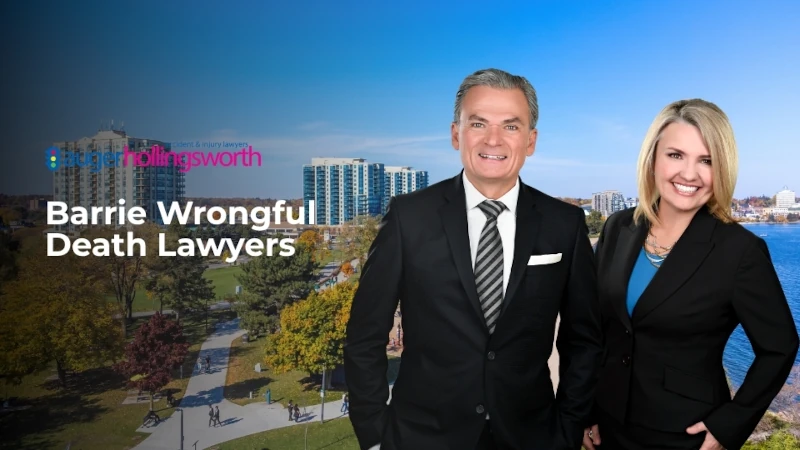
If you’ve lost a loved one due to someone else’s negligence, a Barrie wrongful death lawyer can help your family pursue justice and secure the compensation you deserve. Wrongful death claims allow eligible family members to hold the responsible party accountable for an untimely death caused by negligence, accident, or medical malpractice. At Auger Hollingsworth Accident & Injury Lawyers, our experienced lawyers offer trusted legal guidance and compassionate support throughout the legal process.
Top-Rated Wrongful Death Lawyer in Barrie
Auger Hollingsworth is a leading Barrie personal injury law firm with decades of experience representing families who have suffered the devastating impact of wrongful deaths. Our team understands the immense grief families face, and we are committed to helping clients navigate the complex litigation process while pursuing the financial recovery they are entitled to.
We provide strategic legal services tailored to each unique case. Whether your case involves medical malpractice, a tragic accident, or product liability, our legal experts can guide you through the claims process from start to finish.
Common Causes of Wrongful Death
Wrongful deaths can occur in a range of scenarios where negligence, recklessness, or failure to meet a duty of care leads to fatal consequences. Identifying the cause is a critical step in determining liability and building a strong wrongful death claim. Common causes include:
- Motor Vehicle Collisions: High-speed crashes, distracted or impaired driving, and commercial truck accidents often result in catastrophic injuries or fatalities.
- Medical Malpractice: Surgical errors, misdiagnosis, medication overdoses, and other negligent medical care can lead to preventable deaths. These claims typically require experienced medical malpractice lawyers.
- Workplace Accidents: Unsafe job sites, especially in construction or industrial sectors, can cause fatal falls, electrocution, or machinery-related deaths.
- Defective Products: A faulty product, whether a malfunctioning vehicle part, unsafe children’s toy, or defective medical device, can result in product liability claims and wrongful death lawsuits.
- Dangerous Property Conditions: Slip-and-fall injuries, structural collapses, or poor security measures on another’s premises can lead to fatal injuries under premises liability laws.
- Nursing Home Negligence: Inadequate care, neglect, or abuse in long-term care facilities may cause the untimely death of vulnerable residents.
Each situation involves distinct legal standards, evidence requirements, and insurance issues, all of which a knowledgeable wrongful death lawyer can address.

Request a Call Back
NO WIN, NO FEE GUARANTEE

"(Required)" indicates required fields
Who Can File for a Wrongful Death Claim
 In Ontario, not everyone is permitted to file a wrongful death claim. The Family Law Act defines a limited class of eligible survivors who may seek compensation for their personal losses resulting from a loved one’s death. Those typically eligible include:
- Spouse or Common-Law Partner: May claim for emotional losses, loss of companionship, and loss of care.
- Children and Grandchildren: May pursue damages for loss of guidance and loss of dependency.
- Parents and Grandparents: Often eligible for compensation for emotional distress and loss of services provided by the deceased.
- Siblings: May qualify under certain conditions if they were financially or emotionally dependent on the deceased.
It is essential to act promptly, as wrongful death actions are subject to strict limitation periods under Ontario law. Early legal guidance ensures that rights are protected and that all accident injury claims and wrongful death litigation options are preserved.

Proving Liability in Wrongful Death Claims
 To succeed in a wrongful death action, survivors must prove that the death resulted from the actions or inaction of a negligent party. This requires both legal strategy and a detailed investigation into the facts of the incident. The legal process involves:
- Identifying the Responsible Party: This may include a driver, doctor, property owner, manufacturer, or employer.
- Establishing Duty of Care: Demonstrating that the at-fault party owed a duty to the deceased, such as safe medical treatment or road use.
- Proving Breach and Causation: Showing how the fault party failed to meet legal obligations and how this failure directly caused the death.
- Quantifying Losses: Presenting detailed evidence of financial losses and emotional harm suffered by family members.
- Dealing with Insurance Providers: Navigating insurance policy coverage, insurance claim procedures, and potential insurance disputes.
This phase may also include expert witness testimony, accident reconstruction, medical reports, and employment records. An experienced personal injury attorney ensures that the claim is backed by strong, admissible evidence.